It’s exciting news that NASA successfully launched the Nancy Grace Roman Space Telescope, and it will be even better when the telescope reaches its orbital destination at L2 in a few months. There is so much we don’t know about the universe, and we need ambitious projects like this to help us learn.
Evaluating the wealth of data we get from the telescope might even mark one of those useful applications for AI. We’d still need a lot of human engagement to prevent the AI from pointing us in the wrong direction but the scale of AI calculation will prove useful. This is the kind of braided technology I find pretty exciting.
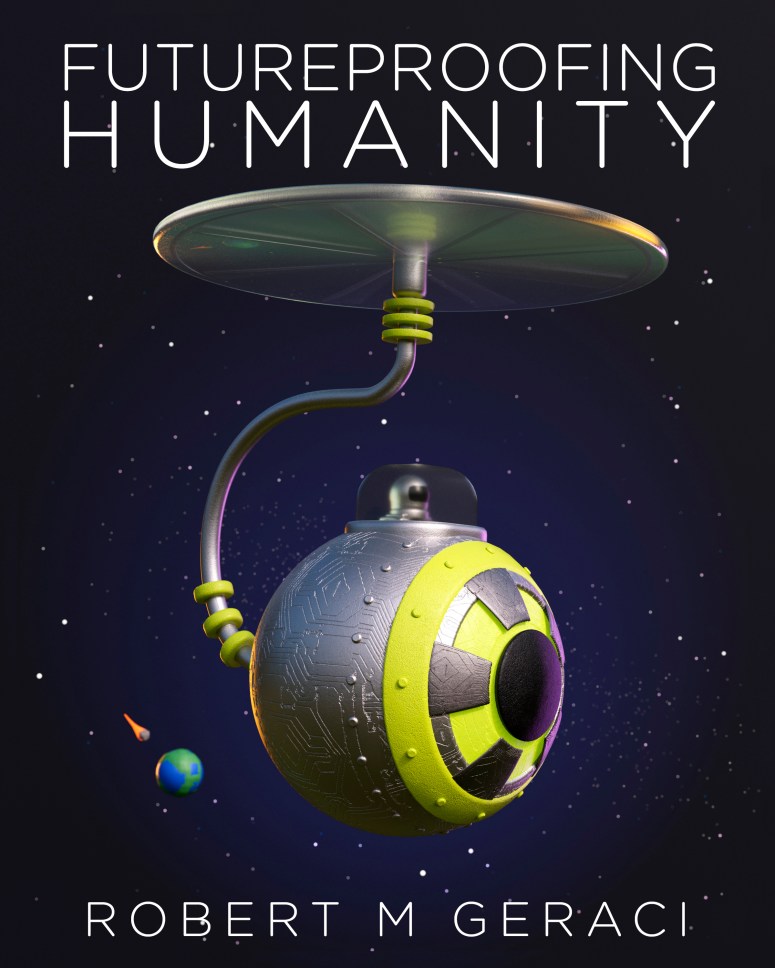
In Futureproofing Humanity, I discuss a different braid: the transhumanist dream of godlike AI, (post)human immortality, and indefinite expansion into space. That, too, is worth our consideration and I think it’s important for human beings to eventually figure out how to travel the stars. But I don’t think it’s happening soon, and I don’t think the current ideology behind all that is the correct one. We need a myth of spaceflight that’s grounded in a pursuit of wonder, a commitment to the flourishing of life (except maybe mosquitos and ticks), and in real scientific research (not just extravagant speculations based on techno-economic growth curves and secularized religious aspirations).
Want to think about spaceflight with me? Check out the book, which Carnegie Mellon University roboticist Matt Mason calls “An insightful perspective on recent technology developments, the potential impact on our survival and our civilization, and on the possible futures envisioned by some of our contemporaries. Informed by a surprisingly rich history of thinkers worried about the possibilities we face today, Futureproofing Humanity is recommended to anybody concerned about the survival of humankind.”

